
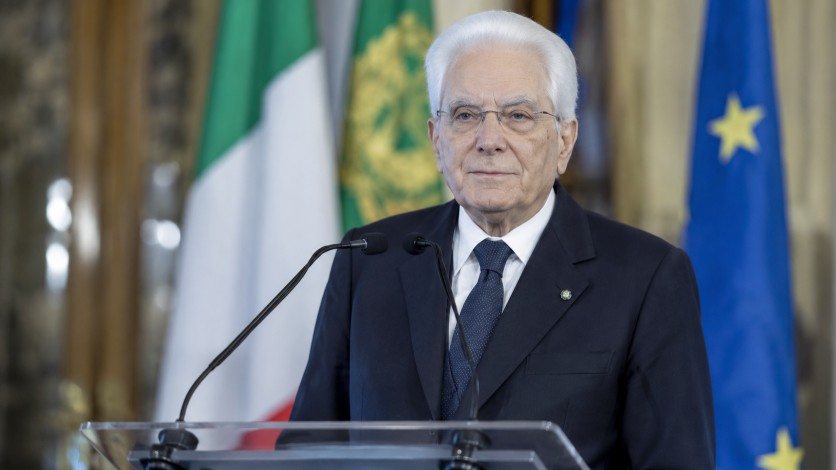
In a recent meeting, Italian President Sergio Mattarella reiterated to Justice Minister Carlo Nordio that the authority to grant pardons is a Presidential prerogative as outlined in the Constitution. This clarification comes in response to the justice ministry’s initiation of pardon proceedings for Mario Roggero. Roggero, a 72-year-old jeweler, has been sentenced to 14 years and nine months in prison for the fatal shooting of two robbers and the injury of another during a robbery at his store in 2021. The sentence was confirmed by Italy’s Supreme Court, rendering it final.
The case has sparked significant public and political discourse, with many figures within the ruling coalition advocating for a comprehensive exploration of all legal avenues. President Mattarella’s intervention underscores a 2006 ruling by the Constitutional Court, which affirmed that the power to grant pardons rests solely with the President. This constitutional provision has been a focal point amid the ongoing debate over Roggero’s case.
The controversy surrounding Roggero’s sentencing highlights the tensions between judicial decisions and public sentiment, as well as the challenges faced by officials in navigating these complex legal and moral landscapes. The incident at Roggero’s jewelry shop, which resulted in the deaths of the two robbers, has been a polarizing issue, drawing varied reactions from different segments of society.
As discussions continue, the focus remains on ensuring that the constitutional guidelines are adhered to, with President Mattarella’s stance serving as a reminder of the established legal framework. This case not only emphasizes the importance of adhering to constitutional mandates but also reflects the broader implications of legal decisions on public opinion and policy.