
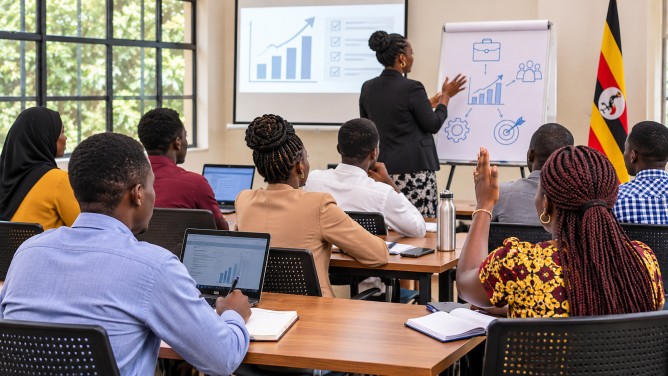
The International Labour Organization (ILO) recently conducted a three-day workshop in Entebbe, Uganda, aimed at enhancing youth participation in employment programme planning and implementation. Part of the PROSPECTS4Youth initiative, the workshop focused on enabling young people, particularly from refugee and host communities, to have a say in decisions impacting their education, skills development, and employment prospects. More than 55 representatives from national and local institutions attended the event from November 3 to 5.
Uganda hosts nearly two million refugees and asylum seekers, with children making up over half of this population. These young people often face significant barriers to education and vocational training, limiting their involvement in supportive programmes. Eesha Moitra, Youth Employment Officer at ILO, emphasized the necessity of creating meaningful opportunities for youth participation in employment initiatives.
The workshop gathered representatives from the Ministry of Gender, Labour and Social Development (MGLSD), the Federation of Uganda Employers, the National Organisation of Trade Unions, district local governments, and organizations led by refugees and youth. UNHCR Uganda Child Protection Officer Tonny Kasiita highlighted that involving youth in programmatic decisions fosters social cohesion and positive development. Uganda is the first country under the PROSPECTS Partnership to implement the ILO’s training package for engaging young people in employment programmes.
Young representatives from the Youth Advisory Committee (YAC) of the Embassy of the Kingdom of the Netherlands in Uganda participated in an opening panel discussion, advocating for youth involvement throughout the programme cycle. Edmund Ayesigwa, a lawyer and social justice activist, stressed that such engagement should lead to visible changes, while YAC member Hellena Angella Nagawa underscored the importance of incorporating young people’s experiences into decision-making processes.
Participants explored practical methods for improving youth engagement, such as using case studies, self-assessments, and group exercises. Discussions included developing monitoring indicators to ensure that youth contributions genuinely influence programme outcomes. Proposed measures included involving young people as peer trainers and creating youth-friendly feedback mechanisms. The sessions also addressed barriers affecting young refugee women, youth with disabilities, and those in remote settlements.
The workshop also featured consultations on a planned WhatsApp-based microlearning course to enhance workplace rights awareness among young people. Drawing from the “Work Wise Youth: A guide to youth rights at work” and its forthcoming Uganda edition, the course will offer accessible information tailored to refugee and host community youth. This initiative aims to make employment programmes more inclusive and responsive to the needs of young people. Follow-up activities within participating institutions are expected to build upon the commitments and proposals developed during the training.
Legal Disclaimer:
The information contained in this article has been provided by independent third-party contributors, clients, or content partners. We do not independently verify the accuracy, completeness, legality, ownership, licensing, or reliability of submitted content, including text, images, videos, trademarks, or other media materials. The submitting party is solely responsible for ensuring that all content, including images and media assets, complies with applicable copyright, trademark, licensing, and intellectual property laws. We disclaim liability for any unauthorized use of copyrighted or proprietary materials by third parties. If you believe that any content published on this platform infringes your intellectual property rights, kindly contact the author above for prompt review and resolution.