
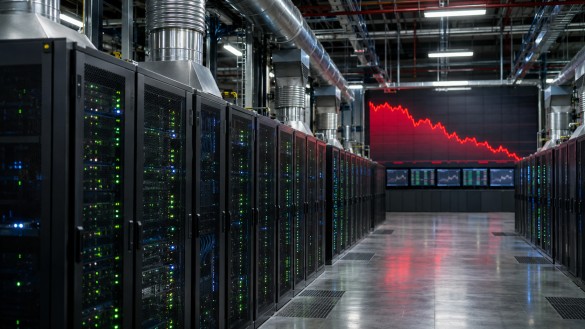
Technology stocks on Wall Street faced a significant downturn as concerns over the future of artificial intelligence (AI) data centers emerged following the U.S. midterm elections. The Nasdaq Composite experienced a sharp decline on Thursday, with semiconductor companies bearing the brunt of the losses. Notably, Nvidia shares fell over 6%, while Advanced Micro Devices (AMD) and Micron Technology saw declines of 12% and 11%, respectively.
These companies are key suppliers of processors and memory chips essential for AI data centers. Their growth trajectory has been closely tied to the substantial investments made by tech companies to expand computing infrastructure for AI services. However, the recent electoral success of several candidates advocating for restrictions or temporary suspensions on new data center projects has introduced uncertainty. These candidates have raised issues related to energy consumption, infrastructure demands, and impacts on local communities, which have cast doubts among investors.
The potential for regulatory changes has weakened confidence in AI-related stocks, which have been strong market performers. This uncertainty over the sustainability of AI investments reflects broader concerns about possible government restrictions on data center expansions.
In parallel, oil prices saw a rebound after earlier declines. Brent crude rose by 2.3% to $96.79 per barrel, and the U.S. West Texas Intermediate crude increased by 2.4% to $90.26. The recovery in oil prices followed expectations that political pressures might lead to diplomatic efforts to resolve the conflict with Iran.
European markets also experienced mixed results, with major indices in London and Frankfurt closing lower despite initial gains post-U.S. election results. Asian technology stocks were similarly impacted, with South Korea’s benchmark index dropping by more than 5%.
The current sell-off underscores the growing uncertainty among investors regarding AI-related investments and reflects shifting dynamics in global energy markets, as well as the potential for increased regulatory oversight of data center expansion.