
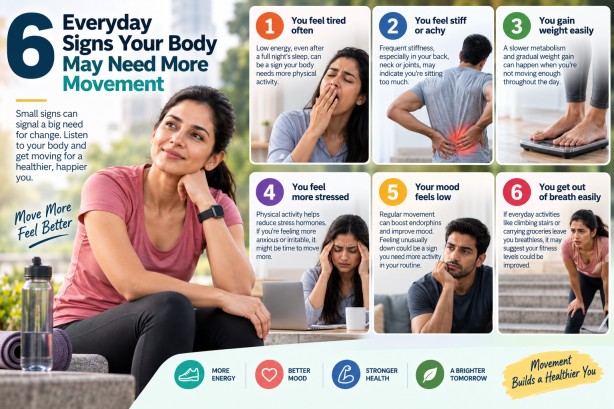
It’s important to recognize the subtle cues your body gives you when it needs more movement, often before pain sets in. Prolonged periods of inactivity, such as sitting at a desk or driving for hours, can gradually impair flexibility, strength, balance, and energy levels. These changes might not always be obvious, but noticing them early can help you incorporate more activity into your day, potentially preventing a more sedentary lifestyle from affecting your daily routine.
One sign that you might need more movement is feeling stiff after sitting for long periods. If your back, hips, shoulders, or legs feel tight when you stand up, it’s a signal that regular movement is needed. Taking short breaks to move around during the day can help keep your joints flexible and comfortable. Another indicator is feeling unusually fatigued after simple tasks, like climbing stairs or doing household chores. This might mean your fitness level requires attention, and incorporating regular physical activity can help improve your stamina and make daily tasks easier.
Feeling sluggish both physically and mentally is another consequence of extended inactivity. Long hours of sitting can make it challenging to stay alert and energetic, but a brief walk, stretch, or movement break can invigorate your routine. Additionally, if you’re experiencing instability with balance—such as difficulty standing on one leg or navigating stairs—it may be time to focus on balance and coordination exercises. Engaging in walking, strength training, and simple balance activities can enhance your stability.
Poor posture, like slumping forward at your desk, might also be a sign of weak or underused muscles due to prolonged sitting. Strengthening your back, legs, and core, along with taking regular breaks from sitting, can support better posture and movement. If everyday movements like bending, squatting, or getting up from a chair become challenging, it might not just be a sign of aging but rather a lack of regular movement affecting your strength and flexibility. Gradually introducing physical activity can help maintain mobility and independence.
Incorporating more movement into your day doesn’t necessarily require long gym sessions. Simple activities like taking short walking breaks, stretching after sitting for extended periods, using stairs, and doing basic strength or balance exercises can be effective. Consistency is key, as small, regular movements can be more sustainable than occasional intense workouts. However, if you experience persistent stiffness, significant weakness, numbness, dizziness, or ongoing pain, it’s advisable to consult a healthcare professional. Ultimately, listening to your body’s early signals for more movement can support strength, mobility, energy, and overall wellbeing at any age.