
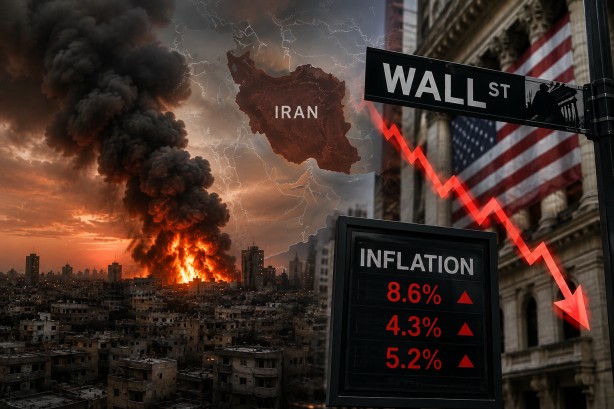
The ongoing conflict in Iran is exerting new inflationary pressures on the United States by driving up energy costs and disrupting global supply chains, raising alarms that elevated interest rates might eventually jeopardize Wall Street’s robust stock-market rally. The most immediate impact has stemmed from disturbances near the Strait of Hormuz, a vital corridor for global energy distribution. This disruption has led to a decline in oil flow, subsequently causing a sharp increase in crude prices, which has translated into higher gasoline and diesel costs for American consumers, thereby adding to overall inflation.
Although oil prices have somewhat softened with the prospect of renewed negotiations, other inflationary forces persist. Increases in transportation costs, disturbances in the supply chain, and rising prices for petroleum-derived products are likely to continue driving up the costs of goods and services. The conflict’s effects are not limited to energy; it also poses risks to sectors like agriculture and technology. For instance, disruptions in fertilizer supplies could lead to higher food production costs, and a shortage of helium, crucial for semiconductor manufacturing, might elevate expenses in the chip industry.
The Federal Reserve is particularly concerned about core inflation remaining high despite cooling energy prices. Persistent underlying inflation could restrict the central bank’s capacity to lower interest rates and might even necessitate tighter monetary policies if price pressures intensify. Elevated interest rates could pose additional hurdles for companies, especially within the technology and AI sectors, where firms are making substantial investments in data centers, chips, and other infrastructure. The increased cost of borrowing could slow down investment and pressure the valuations of high-flying AI stocks.
AI-related companies have significantly contributed to the recent rally in the U.S. stock market. Therefore, a slowdown in AI investment or a decline in the valuations of high-growth technology stocks could potentially weigh down major indexes. The central question for investors remains whether the inflation spurred by the conflict proves to be temporary or permeates the broader economy. If supply chain disruptions persist and core inflation remains elevated, higher interest rates could create a more challenging environment for Wall Street, threatening the ongoing momentum of the bull market.